

When Tears Don't Cleanse: Understanding 'Stuck' Grief and How to Truly Heal
We are often told that crying is the ultimate form of emotional release—a natural, cathartic valve that flushes out pain and leaves relief in its wake.
Yet, for many people navigating loss, years can pass filled with frequent tears, yet the weight in their chest never seems to lighten. Every time the lost person, relationship, or past life is remembered, the floodgates open, leaving them feeling just as raw, exhausted, and stuck as they were on day one.
If crying is supposed to cleanse, why do some tears fail to bring relief?

Decoding Anxiety: Why Your Nervous System Craves 'Signals of Safety' (And How to Find Them)
When anxiety strikes, the standard advice is often to change your thinking: reframe your thoughts, practice deep breathing, or rationalise your fears. While cognitive tools have their place, many people find that no amount of logic can stop their heart from racing or calm the knot in their stomach.

The Dopamine Detour: Why High-Achieving Men Use Over-Stimulation to Avoid Vulnerability
You are driven, reliable, and highly successful. Your calendar is meticulously structured, your professional output is impressive, and from the outside, you look like a man who has his life entirely under control.
Yet, the moment the momentum stops—when the laptop lid shuts, the gym workout ends, or the house goes quiet late at night—an uncomfortable, low-grade restlessness begins to surface.
To quieten that inner noise, you reach for a fresh hit of stimulation. You check work emails at 11 PM, open a market-trading app, research a new fitness regimen, or scroll endlessly through your phone. You keep moving, keep achieving, and keep your nervous system hooked on high alert…

Beyond 'Working Harder': Why Self-Acceptance is the True Path to Peace with Adult ADHD
If you live with adult ADHD—particularly the inattentive type—you are likely no stranger to the inner monologue that insists you just need to "try harder."
Perhaps you have spent years designing the ultimate productivity system, downloading new planner apps, or attempting to "stack evidence" of your discipline. You tell yourself that if you can just stick to a rigid routine, keep your desk clean, and force your brain into submission, you will finally achieve peace of mind.
Yet, despite your best intentions, the pattern inevitably repeats: your focus drifts, the carefully crafted structure collapses, and you are left standing in the ruins of your own expectations.
What follows isn’t just disappointment; it is a tidal wave of profound, internalised shame.

Why Your Mind Goes Blank Under Stress (And How to Break the ‘I Don’t Know’ Trap)
It happens to the best of us. You are in the middle of a vital conversation with your partner, sitting in a high-stakes meeting, or exploring a deep question in a therapy session. The pressure is on, and you want to articulate exactly how you feel.
Then, without warning, the shutter comes down. Your mind goes completely blank.
When asked what you are thinking or what you need in that moment, a single, automatic phrase slips out: “I don’t know.”

The Dopamine Detour: Why Impulsive Habits Mask Hidden Low Mood
For many people—particularly high-functioning professionals, executives, and those bound by a societal script of strength—low mood doesn’t look like sadness. It looks like restlessness. It looks like boredom. Often, it looks like a sudden, out-of-character sprint toward high-risk, impulsive behaviours.

The Harder You Try, The Deeper You Sink: The Closed Loop of Male Distress
If a pipe leaks in your home, you fix it. If your car engine starts knocking, you take it to a mechanic or open the bonnet yourself. For generations, men have been conditioned to view problems through a mechanical lens: identify the fault, apply the correct tool, exert more effort, and resolve the issue.
This functional, problem-solving mindset is highly effective for navigating the material world. It builds businesses, maintains infrastructure, and secures societal status—a core driver in male evolutionary psychology.
However, when this same "fix-it" blueprint is applied to internal emotional distress, anxiety, or grief, men frequently find themselves trapped in an exhausting, self-perpetuating closed loop.

Why ‘Just Talking’ Isn’t Enough: The Science of Relational Healing
It is a common skepticism, often voiced by pragmatists and professionals alike: “Why should I pay to sit in a room and just talk? I can talk to my friends for free. I can read a self-help book for ten pounds. What makes therapy any different from a good chat?”

Too High, Too Low, or Just Right: Understanding Your Window of Tolerance
Have you ever had a day where a tiny inconvenience—like spilling your coffee or someone cutting you off in traffic—made you feel like exploding with rage or bursting into tears?
Alternatively, have you ever experienced moments of high stress where you didn’t fight or cry, but instead went entirely numb, detached, and found yourself staring blankly at a wall, unable to process a single thought?
When our emotional reactions feel this extreme, it is incredibly common to ask ourselves…

The Busy Trap: Why We Use “Doing” to Avoid “Feeling”
In our modern, high-performance culture, "busy" is often worn as a badge of honour. We celebrate the packed calendar, the side hustle, and the ability to juggle a thousand balls without dropping one. But as a psychotherapist, I often look at a "perfectly" busy life and ask a different question: What is all this activity protecting you from?

The Invisible Map: Why We Repeat the Same Relationship Patterns
Have you ever had that "Groundhog Day" moment in your romantic life? Perhaps you’ve just ended a relationship with someone who felt "emotionally unavailable," only to realize three months later that your new partner is effectively the same person in a different jacket. Or maybe you find yourself having the exact same argument—the one about "not being heard" or "needing space"—regardless of who you are actually dating.

The Compassionate “No”: Why Boundaries are the Ultimate Act of Care
Boundaries are not an act of selfishness; they are an act of relational integrity. They ensure that when you show up, you are showing up fully, rather than as a resentful fragment of yourself. By honouring your "No," you protect the "Yes" that matters most—the one you say to your own well-being and the people who truly rely on your strength.

Why Your Inner Critic is a Terrible Life Coach
Many of us treat our inner critic like a high-performance life coach. We think that by being our own harshest judge, we are keeping ourselves sharp. But in the therapy room, I see the reality: Self-criticism doesn't lead to excellence; it leads to exhaustion.

The Leader as a Secure Base: Why Attachment Theory is the Secret to High-Performing Teams
In the high-stakes world of leadership, we are often taught that success is the result of strategy, grit, and "holding people accountable." But if you’ve ever led a team that seemed paralyzed by the fear of making a mistake, or a department where innovation has stalled despite high salaries, you aren’t facing a strategic problem—you’re perhaps facing an attachment problem.

The High Cost of "Keeping the Peace": When Your Body Sets the Boundary Your Mind Can’t
What happens when "keeping the peace" at home and at work starts to cost you your identity? What happens when you’ve spent so long walking on eggshells that you’ve forgotten how it feels to stand on solid ground?

Is Your Anxiety Actually a Message from Your Body?
For many high-achieving men, anxiety is treated like a faulty "check engine" light on a dashboard. The instinct is to find a way to switch it off, ignore it, or—if you’re particularly driven—tape over it so you can keep on driving. You might view your racing heart, tight chest, or restless mind as a biological "glitch" that interferes with your performance and your logic.
But what if that anxiety isn’t a mistake? What if it is a sophisticated, albeit uncomfortable, piece of communication from your body?
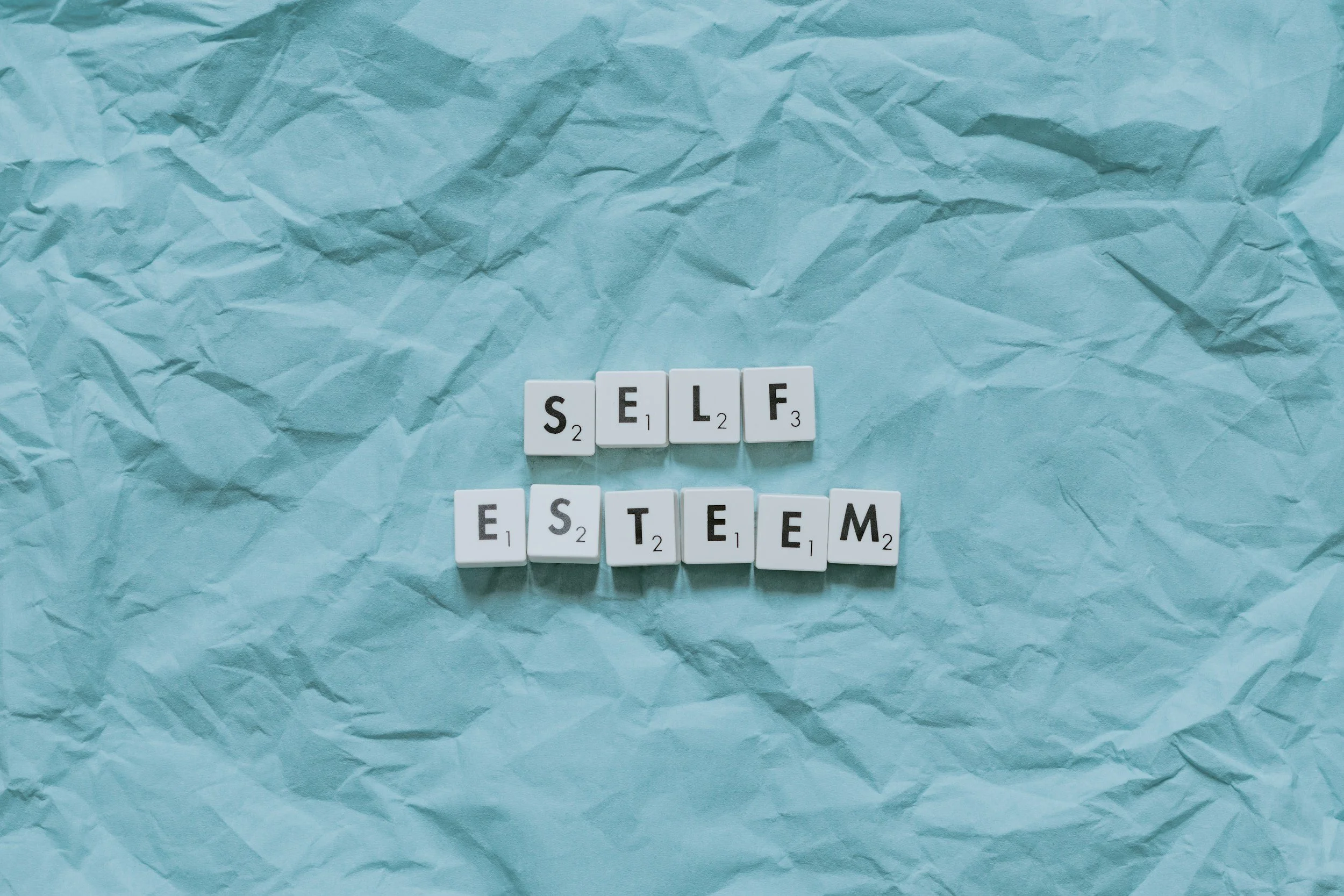
The Secret to Self-Esteem Isn't More Achievement; It's Self-Compassion
If you are like many of the men I see in my Preston practice, you have spent your life operating under a very specific set of rules: Your value is equal to your utility. You believe that if you work harder, earn more, hit that next promotion, or maintain a certain physique, you will finally feel "enough." This is the achievement treadmill. You run faster and faster, but the sense of internal security—that feeling of being fundamentally "okay" regardless of your output—remains just out of reach.

How to Feel Your Feelings (Without Them Overwhelming You)
If you’ve spent a lifetime viewing emotions as a threat to your logic or your control, you likely oscillate between two extremes: Total Suppression (the "Emotional Hangover" where everything is pushed down until it numbs you) or Total Overwhelm (the "Flooding" where anger or anxiety hits like a tidal wave).
In therapy, we don't just talk about feelings; we learn the skill of Emotional Regulation. This isn't about "policing" your emotions—it’s about expanding your capacity to sit with them without being swept away.

“Toxic” or Targeted? Why the UK’s New Masculinity Curriculum Risks Doing More Harm Than Good
The UK Government recently announced a new curriculum aimed at tackling "misogyny" and "toxic masculinity" among schoolboys. While the stated goal of fostering respect and safety is noble, the proposed method—a state-mandated curriculum focusing on the "flaws" of masculinity—is deeply concerning.

From People-Pleaser to Authentically You: The Journey to Setting Boundaries
People-pleasing is not kindness; it’s an unsustainable strategy for managing anxiety and fear. It’s the constant performance of agreement designed to guarantee one thing: safety from abandonment, rejection, or conflict.
In therapy, we understand that authentic relationships do not come from endless compliance. They come from having the courage to define, hold, and communicate your boundaries.